
This post may contain affiliate links. Please read our disclosure policy.
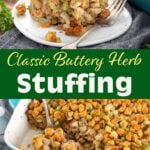
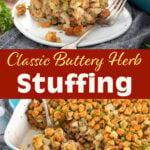
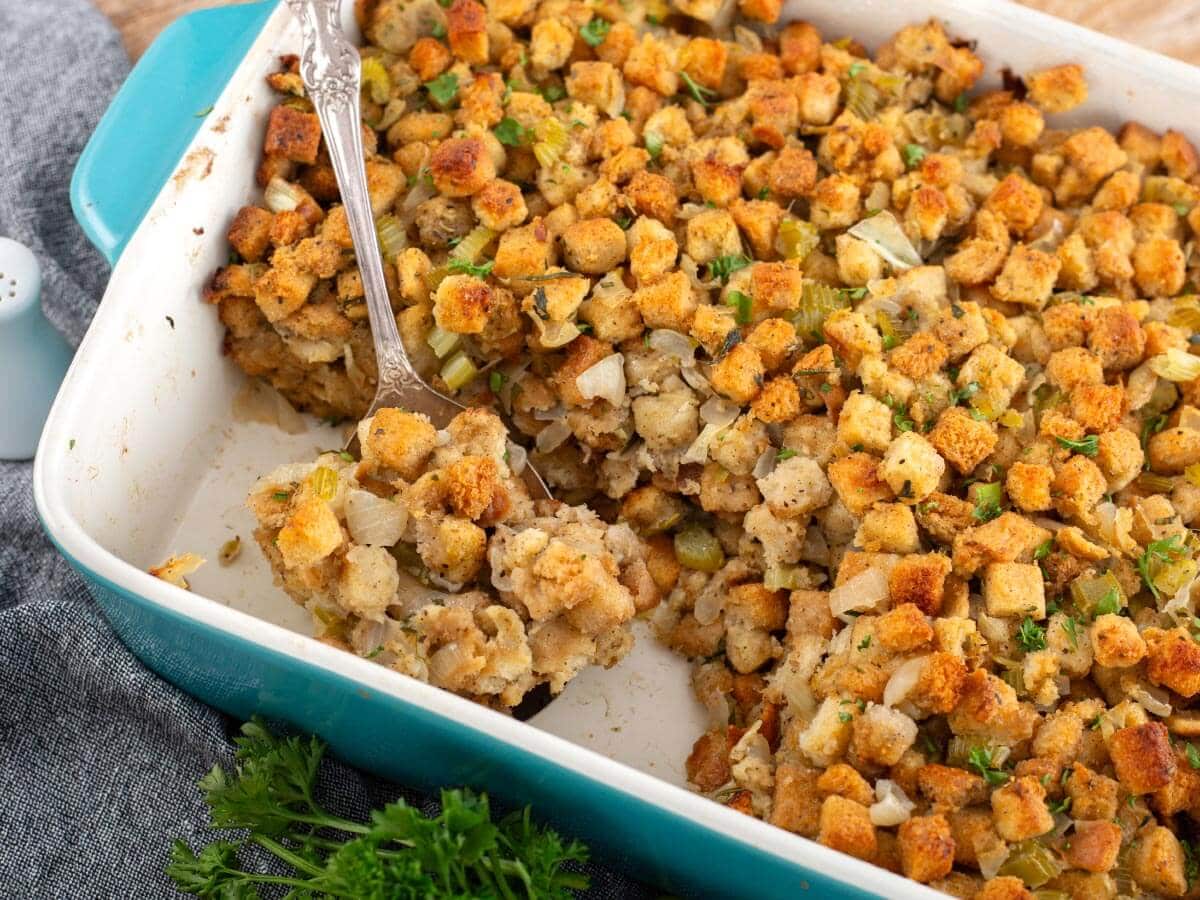
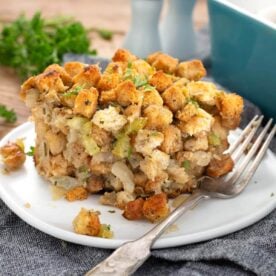
Classic Buttery Herb Stuffing bakes up golden and crisp on top with a tender, buttery middle. Onion, celery, garlic, and plenty of sage give this oven-baked bread stuffing its classic flavor. Serve it with Thanksgiving turkey, Christmas ham, or a Sunday roast chicken.
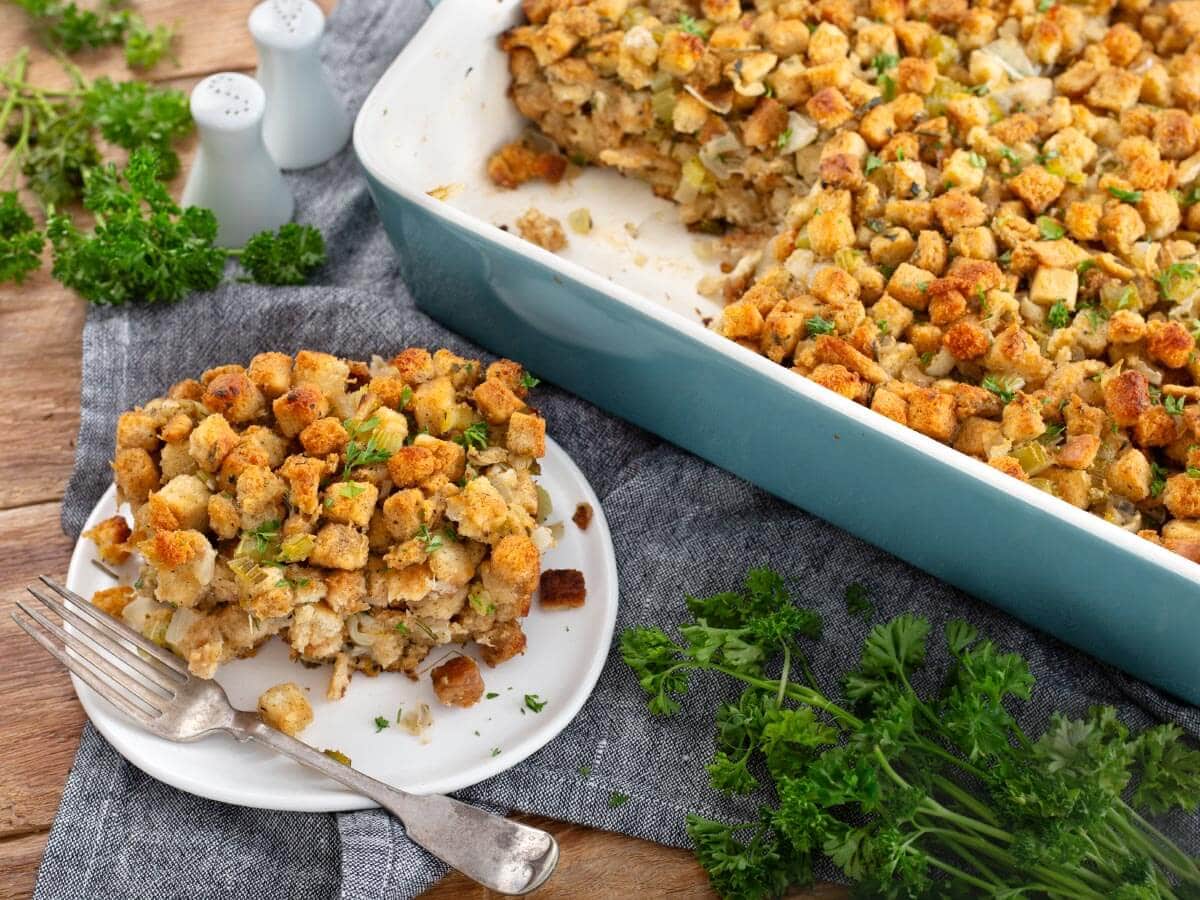
Table of Contents
Classic Oven-Baked Stuffing
This is a traditional Thanksgiving stuffing recipe, the kind that makes the kitchen smell like the holidays as soon as the sage hits the skillet.
I love a scoop with a little of that crisp, golden top and a generous spoonful of my homemade turkey gravy over it!
Why You’ll Love This Stuffing
- You can bake it the day before. Warm it up while you’re getting the rest of dinner ready.
- It works for a small dinner or a full table. Make a half batch in an 8×8-inch dish for Sunday dinner, or bake two pans if you’re feeding a crowd. See the recipe card for scaling this recipe up or down.
Buttery Herb Stuffing Ingredients
Boxed or bagged stuffing cubes make this easy to put together. Have a very large mixing bowl ready so you have room to toss the bread without it spilling over.
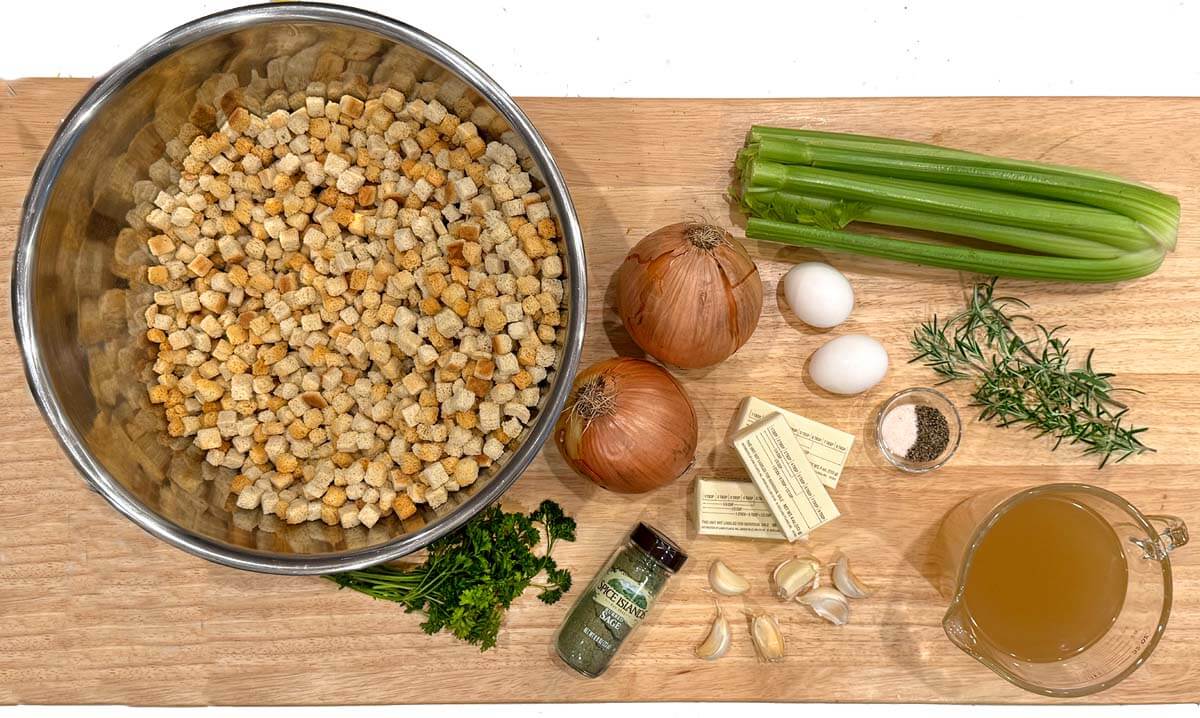
For exact amounts, see the recipe card below.
Dry Cubed Stuffing Mix, Unsalted Butter, Sweet Onion, Celery, Garlic, Dried Rubbed Sage, Fresh Parsley, Fresh Rosemary, Turkey Broth (or Chicken Broth or Vegetable Broth), Eggs, Salt, Black Pepper, Fresh Herbs for Garnish (optional).
- Stuffing cubes. I usually use two 10-ounce packages of herb-seasoned cubes. Plain dried cubes work too. If you have two 12-ounce bags and want to use both, see the broth adjustment in the recipe notes.
- Herbs. I use dried rubbed sage with fresh parsley and rosemary. I like plenty of sage, but you can start with less if you prefer a milder flavor. See the recipe card notes for amounts if you’re using all fresh or all dried herbs.
- Broth. Turkey, chicken, or vegetable broth all work. Taste the onion and broth mixture before adding salt, especially if your broth or stuffing cubes are already well seasoned.
Stuffing Add-Ins
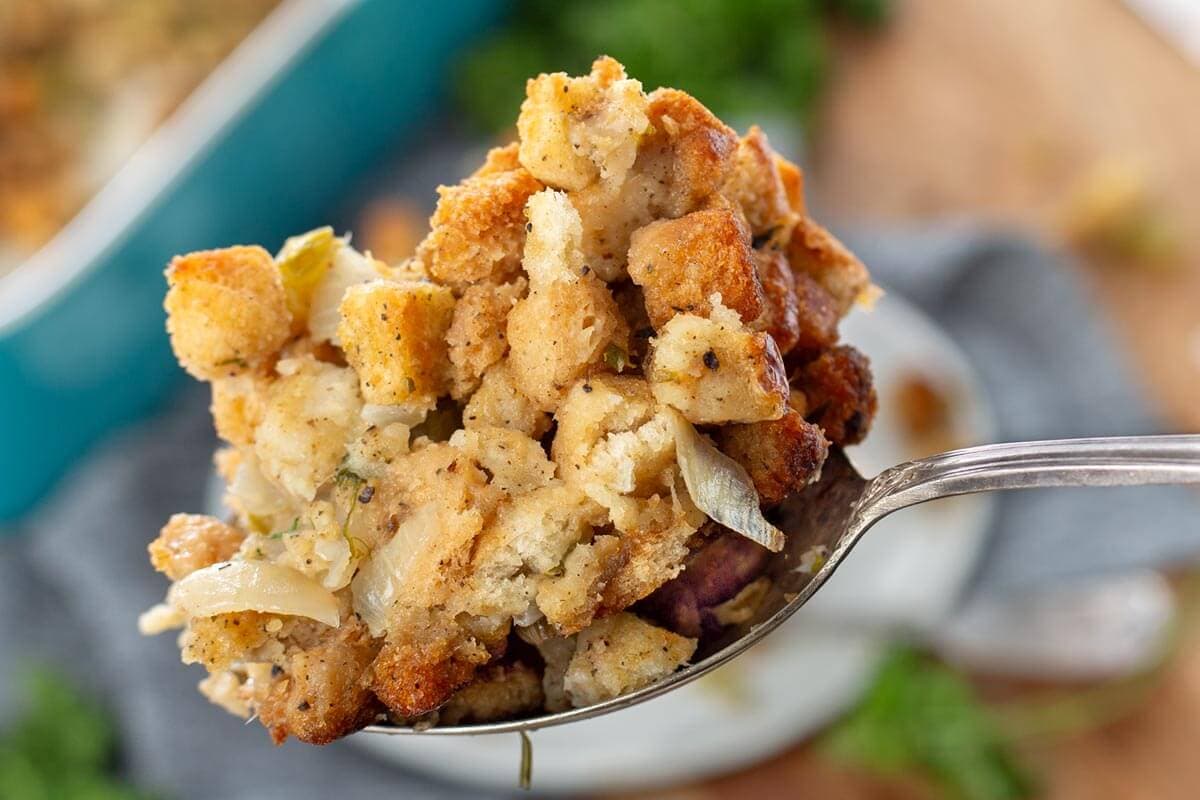
Pick one or two of these and fold them into the moistened bread cubes just before spreading the stuffing in the baking dish.
- Cooked sausage or bacon. Use browned, crumbled sausage or cooked, crumbled bacon (Adjust salt as needed).
- Dried cranberries. Add a little sweet-tart flavor.
- Mushrooms. Sauté chopped mushrooms until their liquid has cooked off.
- Turkey giblets. Cook them first, then chop them finely for extra savory flavor.
- Water chestnuts. Drain and chop canned water chestnuts for a little crunch.
- Apples or pecans. Add finely diced tart apple for a little sweetness or chopped toasted pecans for a nutty crunch.
How to Make Buttery Herb Stuffing
The step-by-step photos below show how I make this stuffing, from softening the onion and celery in butter to tossing the bread cubes and getting them ready for the oven.
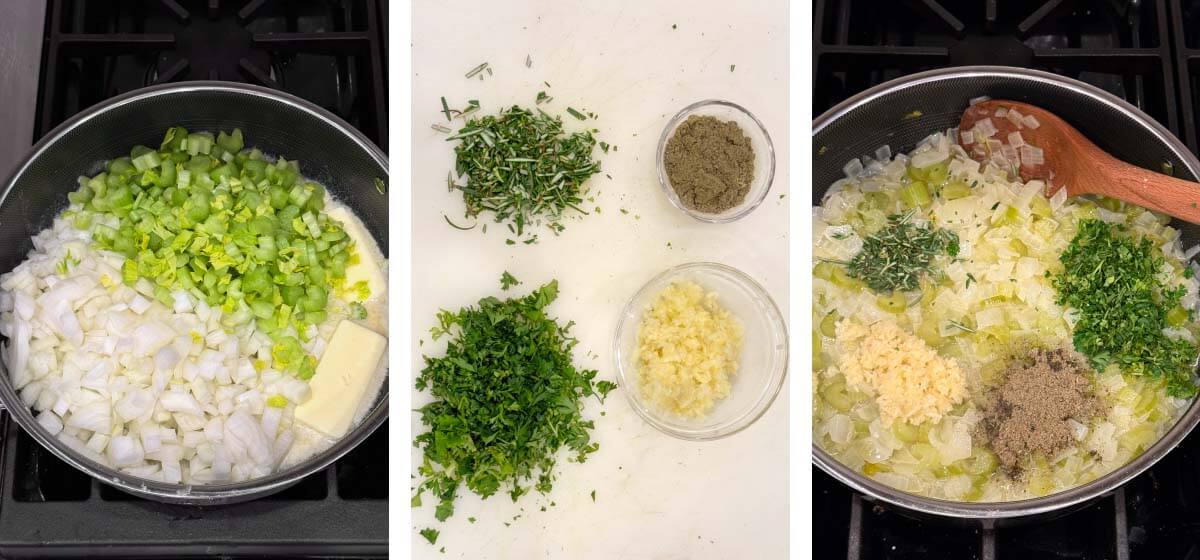
- Soften the onion and celery. Cook them in melted butter over medium heat for about 10–12 minutes, stirring occasionally. Cover the skillet if you want them to soften faster. Meanwhile, mince the garlic and chop the parsley and rosemary.
- Add the garlic and herbs. Stir the garlic, dried rubbed sage, parsley, and rosemary into the softened vegetables. Cook for about 1 minute, stirring frequently.
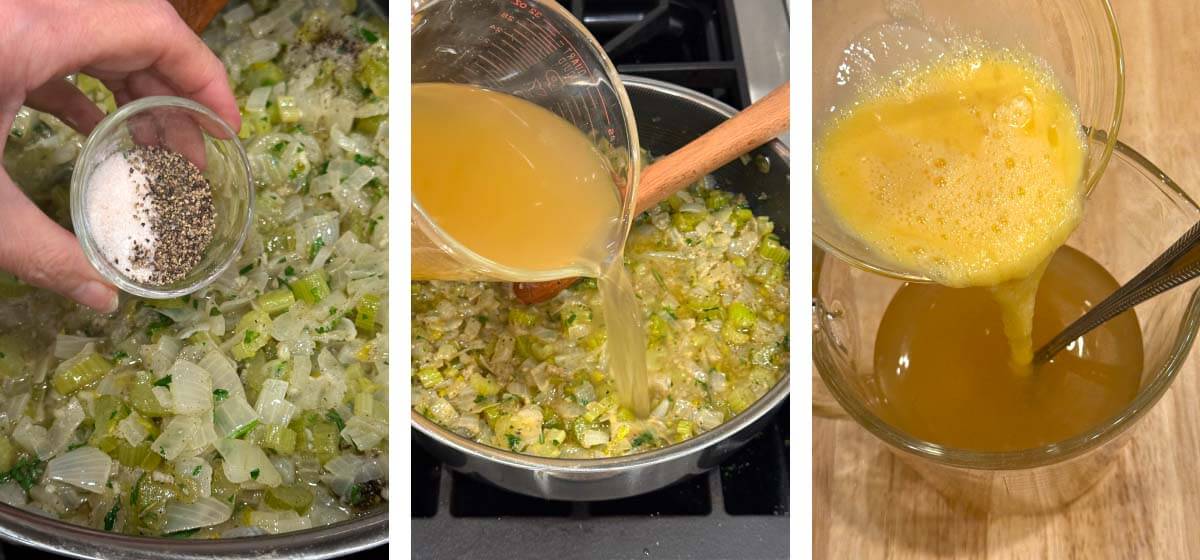
- Divide the broth. Stir 1 cup into the skillet and season with salt and pepper to taste. I like the mixture to taste a little more seasoned at this point, since it will flavor the whole bowl of bread cubes. In a separate bowl, whisk the eggs with the remaining 1½ cups of broth.
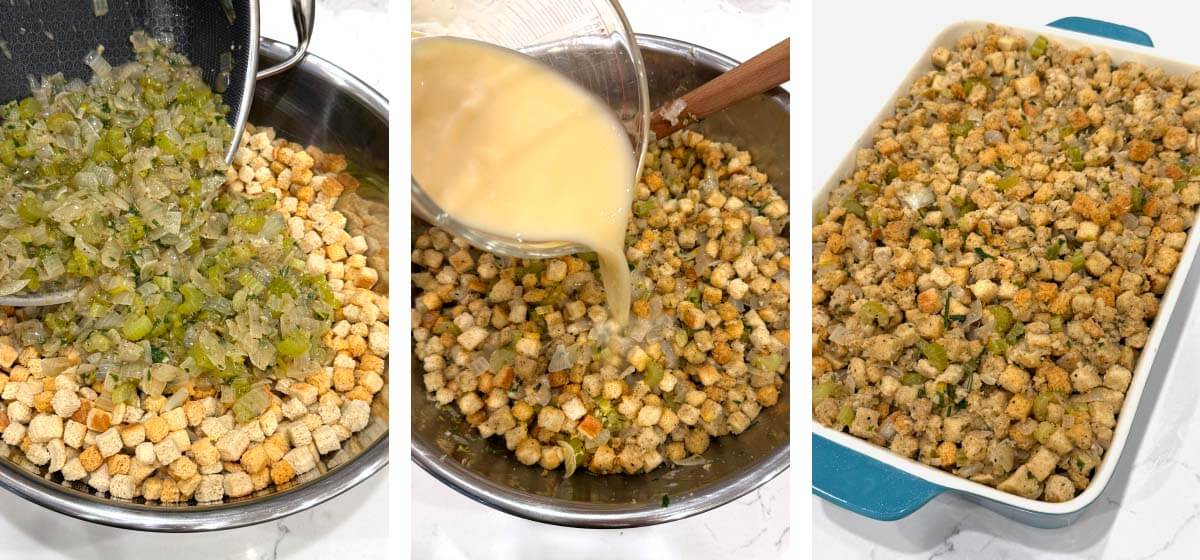
- Toss the stuffing. Pour the onion and celery mixture over the bread cubes and toss to coat. Pour in the egg and broth mixture and gently fold until the cubes are evenly moistened. Spread the stuffing in a buttered 9×13-inch baking dish and gently press it down.
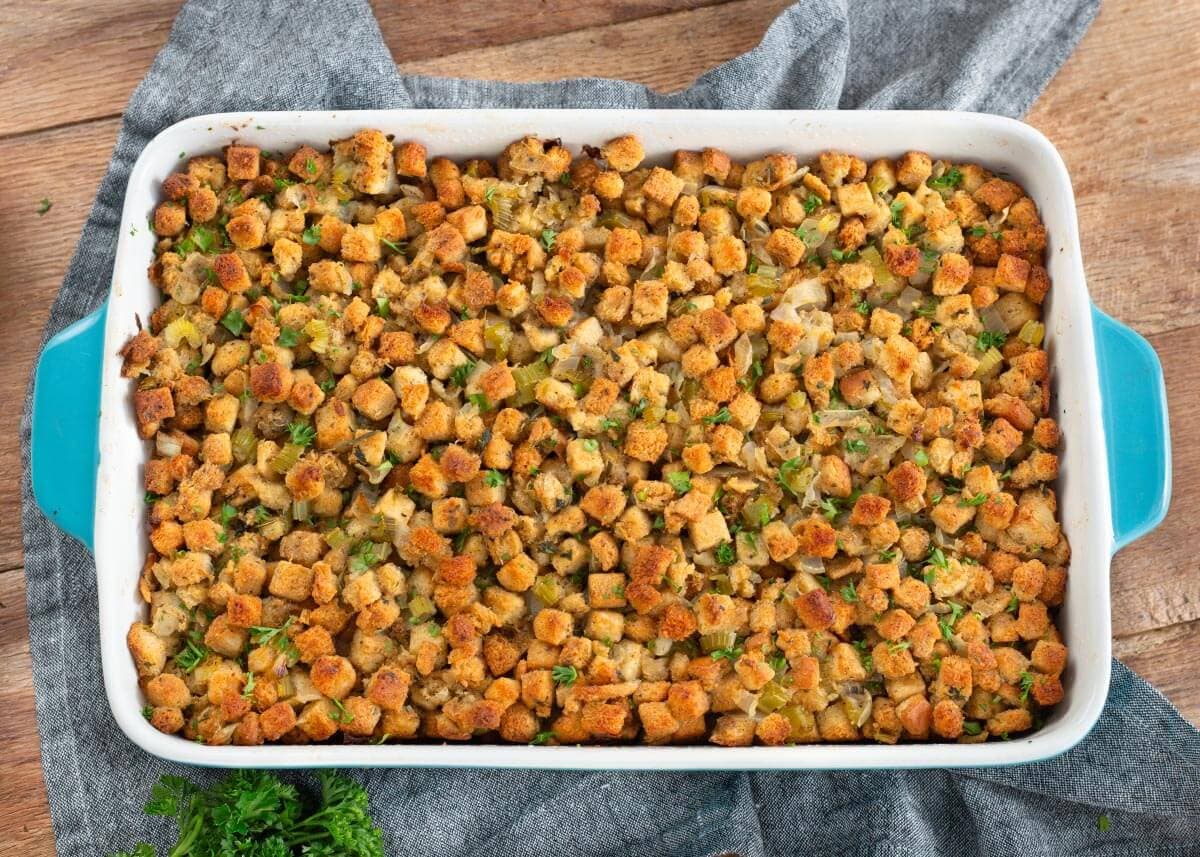
- Bake uncovered at 350°F. Start checking the top at 40 minutes. If it’s already as brown as you like, loosely tent the dish with foil. Plan on about 45–50 minutes and give it more time if the center is below 165°F.
Make Ahead and Reheat
- Bake the stuffing up to one day ahead. Refrigerate it in shallow, covered containers within 2 hours.
- To reheat: Transfer it to an oven-safe dish, cover with foil, and bake at 350°F until it reaches 165°F throughout. Uncover toward the end if you’d like to crisp the top again.
- Refrigerate leftovers for up to 3–4 days total, including any time the stuffing was stored ahead.
What to Serve with Buttery Herb Stuffing
For a holiday dinner, I like to serve this stuffing with Creamy Mashed Potatoes and a spoonful of Slow Cooker Cranberry Sauce.
If you’re bringing it to Friendsgiving, it goes nicely alongside Brown Sugar Bacon Green Beans or Apple Cranberry Coleslaw.
If your oven is full, try my Easy Slow Cooker Stuffing or Instant Pot Stuffing.

More Holiday Recipes
Garlic Cheddar Drop Biscuits
Classic Sweet Potato Casserole
Chocolate Pumpkin Bread
No Bake Pumpkin Cheesecake
Pumpkin Bread Pudding with Vanilla Sauce
My Holiday Recipe Collection
If you make my delicious stuffing recipe, let me know by leaving a comment with a star rating below! 😊
Classic Buttery Herb Stuffing
Equipment
- Large Skillet with lid, or Dutch Oven
Ingredients
- 20 ounces Dry Cubed Stuffing Mix (herb-seasoned or plain) two 10-ounce packages
- 1 cup Unsalted Butter (plus more for greasing the baking dish)
- 3 cups Sweet Onion diced (about 2 large onions)
- 2 cups Celery diced
- 6 cloves Garlic minced
- 1–2 Tablespoons Dried Rubbed Sage (or to taste)
- 3 Tablespoons Fresh Parsley chopped
- 1–2 Tablespoons Fresh Rosemary minced (or to taste)
- 2 ½ cups Turkey Broth (or Chicken or Vegetable Broth) divided
- 2 large Eggs
- 1 teaspoon Salt (or to taste)
- 1 teaspoon Black Pepper (or to taste)
- Fresh Herbs for garnish (optional)
Instructions
Prep
- Preheat the oven to 350°F. Butter a 9×13-inch baking dish or coat it with nonstick spray. Place the dry stuffing cubes in a very large mixing bowl.
Cook the Onion, Celery, and Herbs
- Melt the butter in a large skillet or Dutch oven over medium heat. Add the onion and celery and cook, stirring occasionally, until softened, about 10–12 minutes. Cover the skillet if you want the vegetables to soften faster. If you prefer softer celery, cook it to the tenderness you like before moving on.
- Add the garlic, sage, parsley, and rosemary. Cook for about 1 minute, stirring frequently.
- Stir in 1 cup of the broth. Taste and season with salt and pepper as needed. The mixture should taste a little more seasoned than you want the finished stuffing to be. Remove the skillet from the heat.
Assemble the Stuffing
- In a small bowl or measuring cup, whisk the eggs with the remaining 1½ cups of broth.
- Pour the onion and celery mixture over the bread cubes and toss well to coat. Pour the egg and broth mixture over the bread and gently fold until evenly moistened. Spread the stuffing evenly in the prepared baking dish and gently press it down.
Bake
- Bake uncovered for about 45–50 minutes, until golden on top and the center reaches 165°F. Check the top at 40 minutes. If it’s already as brown as you like, loosely tent it with foil and continue baking until the center reaches 165°F. Garnish with fresh herbs, if desired.
Notes
For the recipe as written, use one full 12-ounce bag plus 8 ounces from the second. If you want to use both full bags, increase the broth to 3 cups total. Stir 1½ cups into the onion and celery mixture and whisk the remaining 1½ cups with the eggs. Homemade Bread Cubes
Sourdough, white bread, wheat bread, or a mix all work. Spread the cubes in a single layer on a baking sheet and leave them out overnight, or bake at 300°F for 15–20 minutes, turning halfway through, until dry. Measure out 20 ounces after drying. Fresh or Dried Herbs
- For all fresh herbs, start with 2 tablespoons finely chopped Fresh Sage in place of the dried rubbed sage.
- For all dried herbs, keep the dried rubbed sage and use 1 tablespoon Dried Parsley and 1-2 teaspoons Dried Rosemary in place of the fresh herbs. Taste the onion and broth mixture and adjust the herbs before tossing it with the bread cubes.
The full recipe serves 8–12, depending on portion size. For a half batch, use an 8×8-inch or 9×9-inch baking dish and start checking at 40 minutes. For a double batch, divide the stuffing between two 9×13-inch dishes and check each dish for doneness. The center should reach 165°F for either batch size. Make Ahead and Reheat
Bake up to one day ahead and refrigerate in shallow, covered containers within 2 hours. To reheat, transfer to an oven-safe dish, cover with foil, and bake at 350°F until the stuffing reaches 165°F throughout. Uncover toward the end to crisp the top, if desired. To Stuff a Turkey
Baking the stuffing separately makes it easier to check the temperature. If you prefer to stuff the turkey, spoon the freshly mixed stuffing loosely into the cavity just before roasting. Roast the stuffed turkey right away at 325°F or higher. Bake any extra in a separate dish. Use a food thermometer to check that the center of the stuffing reaches 165°F. The turkey should also reach 165°F in the thickest part of the breast and the innermost parts of the thigh and wing.
Nutrition
Nutrition information is automatically calculated, so should only be used as an approximation.